Find a Doctor
To find your closest EVO ICL doctor, start by searching your location.
3+ million lenses distributed worldwide

Sort by:
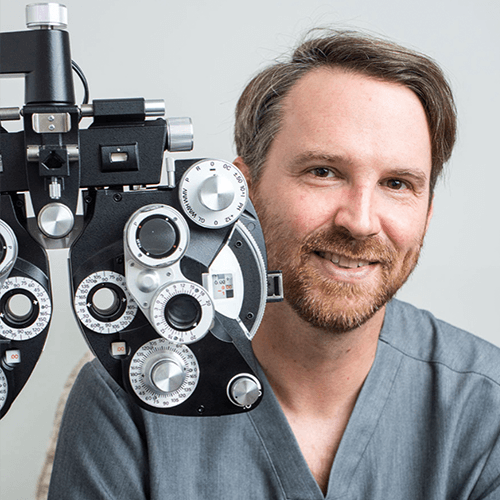
Nicholas Lancaster, MD
SharpeVision MODERN LASIK - Austin
Set Up A Consultation
Contact this office directly and mention your interest in EVO ICL
(512) 596-2020
Luke Barker, MD
Westlake Eye Specialists
Set Up A Consultation
Contact this office directly and mention your interest in EVO ICL
(512) 472-4011
Kyla Aschenbeck, MD
Texan Eye- Main Central
Set Up A Consultation
Contact this office directly and mention your interest in EVO ICL
(512) 327-7000
Zarmeena Vendal
Westlake Eye Specialists
Set Up A Consultation
Contact this office directly and mention your interest in EVO ICL
(512) 472-4011
Shannon Wong, MD
Austin Eye
Set Up A Consultation
Contact this office directly and mention your interest in EVO ICL
(512) 250-2020
Farhan Irshad
LASIK MD Austin
Set Up A Consultation
Contact this office directly and mention your interest in EVO ICL
(512) 975-2020
Kristen M. Hawthorne, MD
Howerton Eye Clinic- Southwest Austin
Set Up A Consultation
Contact this office directly and mention your interest in EVO ICL
(512) 872-6059
Ashley Brundrett, MD
Mann Eye Institute - North Austin
Set Up A Consultation
Contact this office directly and mention your interest in EVO ICL
(512) 200-3937
David Tremblay, MD
Mann Eye Institute - North Austin
Set Up A Consultation
Contact this office directly and mention your interest in EVO ICL
(512) 200-3937Office Information
Westlake Eye Specialists
Office Hours
- Today
- Closed
About this Doctor
Luke Barker, MD specializes in Refractive Lens Surgery and comprehensive eye care, including Glaucoma treatment with the latest advancements in MIGS (Minimally Invasive Glaucoma Surgery). Dr. Barker is a Board-Certified Diplomate of the American Board of Ophthalmology, a Fellow of the American Academy of Ophthalmology, and a member of the American Society of Cataract and Refractive Surgeons. In 2025, he joined Westlake Eye Specialists as a leading cataract, refractive, and MIGS surgeon, bringing years of expertise to patients in Austin and surrounding areas. Prior to this, he spent nearly a decade as the lead cataract and refractive surgeon at Mann Eye Institute in Austin, TX.
Raised in Murfreesboro, TN, Dr. Barker earned his BS in Chemistry from Middle Tennessee State University before obtaining his Medical Degree from East Tennessee State University Quillen College of Medicine. He then moved to Texas, where he completed his Internship and Ophthalmology Residency at Texas A&M University System Health Science Center, Scott & White Memorial Hospital, serving as Chief Resident in his final year. Over his career, he has successfully performed more than 25,000 refractive surgery procedures, including ICL, as well as medical anterior segment procedures for glaucoma and corneal conditions.
Dr. Barker is deeply committed to medical mission work, both locally and internationally. He has volunteered his time and skills for medical missions in Mexico, Belize, and Fiji, and has also contributed to local outreach through Cornerstone Free Clinic.
Outside of medicine, Dr. Barker leads an active lifestyle with his three sons and daughter. He enjoys tennis, cycling, hiking, kayaking, surfing, and outdoor sports, along with travel, photography, and spending quality time with his family.
Education
- Undergraduate Degree- Middle Tennessee State University
- Medical Degree- East Tennessee State University Quillen College of Medicine
- Internship- Texas A&M University System Health Science Center, Scott & White Memorial Hospital
- Residency- Texas A&M University System Health Science Center, Scott & White Memorial Hospital
Call today to set up a consultation for EVO ICL
(512) 472-4011Select Your Region
Latin America
References
1. Packer M. The Implantable Collamer Lens with a central port: review of the literature. Clin Ophthalmol. 2018;12:2427-2438.
2. Martínez-Plaza E, López-Miguel A, López-de la Rosa A, et al. Effect of the EVO+ Visian Phakic Implantable Collamer Lens on Visual Performance and Quality of Vision and Life, Am J Ophthalmol 2021;226:117-125.
3. Packer M. Evaluation of the EVO/EVO+ Sphere and Toric Visian ICL: Six month results from the United States Food and Drug Administration clinical trial. Clinical Ophthalmology. 2022;16:1541-53.
4. Parkhurst GD. A prospective comparison of phakic collamer lenses and wavefront-optimized laser-assisted in situ keratomileusis for correction of myopia. Clin Ophthalmol. 2016;10:1209-1215.
5. Zhang H, Deng Y, Ma K, Yin H, Tang J. Analysis on the changes of objective indicators of dry eye after implantable collamer lens (ICL) implantation surgery. Graefes Arch Clin Exp Ophthalmol. 2024 Jul; 262(7):2321-2328
6. Shoja, MR. Besharati, MR. Dry eye after LASIK for myopia: Incidence and risk factors. Eur J of Ophthalmol. 2007; 17(1): pp. 1-6.
7. Lee, Jae Bum et al. Comparison of tear secretion and tear film instability after photorefractive keratectomy and laser in situ keratomileusis. J Cataract Refract Surg., Volume 26 , Issue 9 , 1326 - 1331.
8. Parkhurst, G. Psolka, M. Kezirian, G. Phakic intraocular lens implantantion in United States military warfighters: A retrospective analysis of early clinical outcomes of the Visian ICL. J Refract Surg. 2011;27(7):473-481.
This provider locator tool is being provided by STAAR Surgical® Company (“STAAR”) solely to assist users in locating a provider who has experience with the EVO ICL family of lenses, as explained further here. Specifically, the sole criteria for inclusion in the locator is whether a provider is certified by STAAR to implant EVO ICL lenses. Users may search the locator by zip code, state, or current location. Two types of sorting functionality is available within the locator. Users are able to sort the results via distance, or by the frequency with which a healthcare provider has recently used EVO ICL lenses (e.g., within the past 12 months). Irrespective of the sorting method selected, all providers are shown in the results within the queried geographic location. The listed order of providers under any sorting method, including the initial presentation of providers in a geographic location, is based on a variety of factors, including whether the provider maintains consumer-facing information about EVO ICL lenses on its website, the breadth and quality of such information, whether it has demonstrated a commitment to training staff and offering the EVO ICL as a refractive procedure option to qualified patients, and how frequently the provider has performed procedures using the EVO ICL over the past year.
Notwithstanding the above, this provider locator tool should not be construed in any way as an endorsement or recommendation by STAAR as to the qualifications of any provider listed in this tool or the quality of medical care they can provide. STAAR makes no guarantees that using a provider from this list will result in your desired outcome. It is wholly and solely your responsibility to assess the qualifications of a potential provider. STAAR recommends that you meet and discuss the benefits and risks of the EVO ICL lens, and the procedure to implant the EVO ICL lens with the potential provider.
STAAR hereby disclaims any and all liability arising from your use of and/or reliance on the information contained in this provider locator tool.
Important Safety Information
The EVO Visian ICL Lens is intended for the correction of moderate to high nearsightedness. EVO Visian ICL and EVO Visian TICL surgery is intended to safely and effectively correct nearsightedness between -3.0 D to -15.0 D, the reduction in nearsightedness up to -20.0 D and treatment of astigmatism from 1.0 D to 4.0 D. If you have nearsightedness within these ranges, EVO Visian ICL surgery may improve your distance vision without eyeglasses or contact lenses. Because the EVO Visian ICL corrects for distance vision, it does not eliminate the need for reading glasses, you may require them at some point, even if you have never worn them before.
Implantation of the EVO Visian ICL is a surgical procedure, and as such, carries potentially serious risks. Please discuss the risks with your eye care professional. Complications, although rare, may include need for additional surgical procedures, inflammation, loss of cells from the back surface of the cornea, increase in eye pressure, and cataracts.
You should NOT have EVO Visian ICL surgery if:
- Your doctor determines that the shape of your eye is not an appropriate fit for the EVO Visian ICL
- You are pregnant or nursing
- You have moderate to severe damage to the optic nerve caused by increased pressure (glaucoma)
- You do not meet the minimum endothelial cell density for your age at the time of implantation as determined by your eye doctor
- Your vision is not stable as determined by your eye doctor
Before considering EVO Visian ICL surgery you should have a complete eye examination and talk with your eye care professional about EVO Visian ICL surgery, especially the potential benefits, risks, and complications. You should discuss the time needed for healing after surgery. For additional information with potential benefits, risks and complications please visit DiscoverICL.com.
Feeling unsure?
We get it. Decisions like this take time to consider and research. We can help guide your decision with information that's the most relevant to you.
Do you currently wear glasses or contacts?